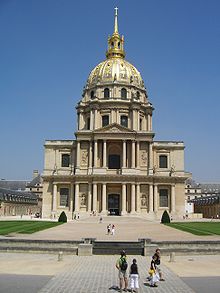
Hostel of God

A french hospital showing the close relationship of hospital and cathedral

The sun was just beginning to crest over the red rock hills of St. George, as we entered the Dixie Regional Medical Center. A kind, silver-haired gentleman greeted us at the door, his nametag indicating that, even at this early morning hour, “volunteers” are filling their golden years with good works. He directed us to a waiting area where I got a cup of coffee and settled into a corner chair, in anticipation of a long day of reading and catching up on emails. Meanwhile, my parents filled out some last minute paperwork for my stepfather’s surgery. As I looked around the room, filled  mostly with older men and women, a perceptible feeling of anxiety filled the air. Clutching overnight bags and talking in nervous loud whispers, all seemed extremely humble. One by one, the room emptied as nurses called out their names, Frank, Hilda, Robert, names that betrayed the years of their birth.  The hours wore on, and Glenn Beck blared in the background (I think old people like Glenn Beck because they figure if it is almost the end of the world for them it might as well be for everyone).  Eventually, doctors began to come into the room, looking for anxious relatives to report on surgeries that had gone as planned. A collective sigh of relief could be heard from the whole group who had been brought together by a Tuesday morning schedule. As I watched the confidence and carriage of these young doctors, doctors who had spent years studying and learning the skills of a surgeon, it was hard to not note the contrast. Once again I heard the small voice that has become my constant companion whisper, “God is in the paradox.” The Greek Orthodox theologians teach any statement of God must be paradoxical, to remind us that the divine cannot fit into our limited human categories. God did indeed seem to be in the paradox of this hospital/cathedral. Spending a few days visiting in a hospital, I could understand how healing happens with the skill of a surgeon, but also with the soothing voice of a recovery nurse. The high tech of the hospital was balanced with the peace of the healing gardens. The brusqueness of the focused doctors was eased by the kindness and comfort of  “Rose” the nurse. The prayers of relatives were answered with skills gained from years of study by the medical staff.  Knowledge was balanced by humility.

The word hospital comes for the Latin word hospus meaning stranger or foreigner. Other similar words are hospitality, hotel, hostel, and hospice. In Medieval times, a hospital was the work of the church to provide a place of shelter for the visitor, the stranger and the infirm. Each town with a cathedral also had a hospital The French word for hospital is Hotel-Dieu meaning “hostel of God.” Today, architects design hospitals as a “hotel” of sorts. Emphasis is now given to both the technology and the aesthetics of the building. Dixie Regional Medical center serves as an art gallery as many of Southern Utah’s finest artists display their work in the halls. The gardens surrounding the hospital, gifts from philanthropists, are peaceful and beautiful; the staff seemed unusually kind, trained to be “hospitable”.

A few days sitting in the hospital, away from the everyday cares of life became a Sabbath. I realized that I have found God in the paradox of faith and reason. Healing requires both body and spirit. Spirituality consists of seeking and finding; wisdom is a product of joy and pain and life is found in birth and death. The paradox insures that I cannot ever create God in my image

Posted in Uncategorized | 3 Comments

Where’s my eraser?

So in continuing with my art lessons—One evening as we sat around drawing, our teacher asked us what our favorite new tool to draw with was? This alone has been an eye opening experience as, previous to this class, I always thought that there was only one tool—a pencil. My favorite has been vine charcoal, made from a burnt piece of grapevine, and “smooth as butter” as our teacher says. Others liked the pens and the compressed charcoal. When she asked the girl, who was drawing next to me, what her favorite medium was, without hesitating she replied, “the eraser.” I chuckled to myself; yes an eraser had become a very good friend to me too. Then Annie, our teacher, began to expound on how critical our eraser is to “letting in the light in our pictures.” I stopped and glanced at the landscape of the “eraser girl.” It was beautiful and she was drawing with her eraser! Annie then explained that the painter, Jan Vermeer, was famous for his works of light. He created his paintings by first putting down a layer of paint and then going back and removing the paint where he wanted the light to shine through. A quick question to the Google god reveals many examples of “subtractive” drawing where layers of charcoal are then removed with an eraser, letting the light shine through the drawings.

Driving home from the University of Utah that night in my “pondermobile,” I began to think of how important erasing is in other areas of my life. Just like my drawings which are total “works in progress” so is my life. There are few mistakes that cannot be erased, no lines that cannot be removed and even in the most dark times we can find ways to let the light shine through. Especially in my motherhood career, I wish that I had the opportunity for “do overs.” But, instead of wadding up “the paper” and starting again, we can get out our magic eraser and redraw the lines. As I have learned in class, the smudges add “richness, texture and layers” to our finished drawings. It is comforting to draw knowing that I can fix mistakes. It removes some of the fear. It is comforting to live knowing that a wad of love can be used to clean up the myriad blunders I make in the “art of being human.”  As I continue to forge forward on the self- portrait called “ME,” I will erase, redraw, stand back, try again, and be satisfied if it still remains slightly off-balance.

Posted in Uncategorized | 3 Comments

Perspective

I enrolled in a new class this semester at the University of Utah-Basic Drawing. Perhaps, it needs to be called “Sort of, Basic Drawing.” I am doing my best to keep up with my fellow artists as we learn the ins and outs of pencils, pens and charcoal. A few weeks ago the syllabus said, “Still Life.” Upon arriving in the classroom, our teacher Annie, a fun-loving art professor from the Rhode Island School of Design, had set up a fairly extensive “still-life” including a vase, boxes, plants and a statue of the goddess Diana.  She told us to walk around, choose a view we liked and to get out our materials. A fellow student and I chose what we thought would be the easier view which included the backside of Diana. We arranged our drawing boards, opened our charcoal and began to “rough-in” the various shapes to the best of our ability. Annie walked around the room giving us suggestions and helping us to see both the positive and negative lines in our drawings. After about twenty minutes, she told us to stand and stretch and then walk around and look at each others drawings. When we had done so, she then told us to move one seat to the left. This is now your drawing she said. “Oh crap, now I had to draw Diana from the side!” She told us to erase anything that didn’t seem right and to adjust our focus so that we could look at the arrangement from a new perspective. At least, my fellow student had made significant progress on his drawing. I cringed, as out of the corner of my eye, I could see the girl who took my chair get out her eraser. Soon, we were all silently, intently working away, shading here, drawing new lines there. Just when I felt comfortable with my new perspective, we were told to stand, stretch and take the seat to our left. “Oh, it couldn’t be, now I had to draw Diana’s face head on.” This was the angle I had strictly avoided when I first chose a place to sit. Maybe I could just work on the vase a little longer until another student came to fill this chair. As the evening passed we got used to “standing, stretching and moving a seat to our left.” We also got used to erasing and trying to make our pictures conform to what we were “seeing” in front of our eyes.  As the evening drew to a close and we looked at our finished projects no one was too attached to what we had drawn, in fact the teacher gathered them and dropped them in the recycle bin. Annie then explained that the purpose of this exercise was to show us that we should never get so attached to what we were drawing or to what we were looking at that we were afraid to start over or erase or remove the offending lines so that our pictures were representations of what we were really seeing. We should always take the time to stand up, stretch and look at our work from different angles and most importantly we must draw with a perspective of the “whole” work and not just look at a small section or detail. By moving around the room not only did we come to view the arrangement in the middle differently, but we also came to look at each drawing from a more “holistic” perspective.

As I started looking at the intricasies of Diana’s face instead of her backside, I was forced to face my fears and start drawing.  Learning to draw, like so many other things in life, has been about facing my fears and about really looking at things. “If you can see it, you can draw it” has become the mantra of the class. And like my dance class, moving into the “right” side of my brain for a couple hours each week, helps me to sort out all the chitter/chatter that is always going on in the left hemisphere. In so many areas of our life, we choose a view of something, often because it is the easiest view, and then cling to it. We fear moving to another chair. Our greatest fear though is getting out an eraser and starting over, especially when we have invested so much time in a particular “picture.” How many times have I looked at something and chosen the “easier” path only to have life force me to move over and confront what I didn’t want to “see” in the first place. Maybe it wasn’t coincidence that I had to look Diana-the goddess of love- in the face, maybe it is “perfect love that casteth out fear.” And maybe as my brother-in-law Dale and I have discussed many times, art is about letting go of fear and the art of life is about not clinging too tightly but having the courage to occasionally let go.

Posted in Uncategorized | 3 Comments